Malaysia Digital Nomad Visa: The 2026 DE Rantau Guide
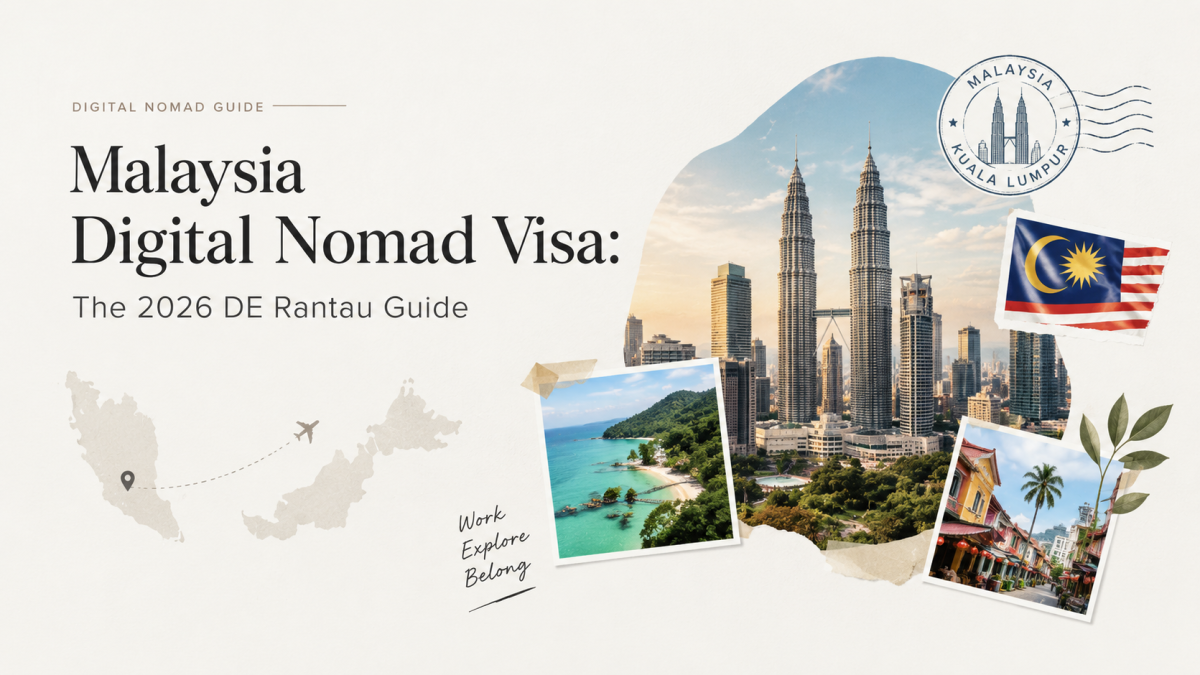
Malaysia doesn’t get nearly the attention Bali or Thailand do in digital nomad conversations, which is strange given what it actually offers. The Malaysia digital nomad visa — officially the DE Rantau Nomad Pass — pairs genuinely modern infrastructure with a surprising amount of untouched nature, and it currently ranks among the top five destinations globally in Passportivity’s 2026 Digital Nomad Visa Index, according to NatLawReview’s coverage of the ranking.
What DE Rantau Actually Is
Launched in October 2022 and run by the Malaysia Digital Economy Corporation (MDEC), the DE Rantau Nomad Pass is a Professional Visit Pass built specifically for location-independent remote workers, according to KLNomad’s 2026 guide. Since a June 2024 expansion, the program now runs on two separate income tiers: a $24,000/year threshold for tech and digital-economy roles — software development, cybersecurity, digital marketing, UX/UI design, content creation — and a considerably higher $60,000/year threshold for non-tech professionals like executives, consultants, and finance or HR specialists, per Vivre en Malaisie’s 2026 breakdown. Either way, you cannot work for a Malaysian-registered employer under this pass — your income has to come entirely from outside the country.
Duration and Renewal
The pass runs 3 to 12 months initially, renewable for a further 12 months, for a maximum combined stay of 24 months, according to KLNomad’s guide. The processing fee runs around RM1,080 (roughly $230), with an additional RM540 per dependent if you’re bringing family along.
The Tax Question Worth Watching Closely
This is genuinely one of DE Rantau’s biggest selling points, and also where you need to pay attention to the fine print. Malaysia currently charges 0% tax on foreign-sourced income for DE Rantau holders, according to NomadTaxGuide’s 2026 breakdown — but ShareUHack’s 2026 guide notes this exemption has specifically been the subject of circulating claims that it could end in 2026. Treat that uncertainty seriously: confirm the current tax treatment directly with Malaysia’s Inland Revenue Board (LHDN) rather than assuming the 0% rate holds indefinitely, especially if you’re planning a stay that extends toward the full 24-month maximum.
A Real Limitation to Know Before You Commit
Two restrictions catch applicants off guard. First, according to Rumavi’s 2026 reality-check guide, DE Rantau covers Peninsular Malaysia only — it explicitly does not extend to Sabah or Sarawak on Borneo, so if your plan includes basing yourself on the Malaysian side of Borneo, this isn’t the right visa. Second, the same guide confirms there’s no permanent residency pathway attached to this pass at all; Malaysia’s separate Malaysia My Second Home (MM2H) program exists for long-term settlement, but its requirements sit substantially higher than what most DE Rantau qualifiers meet.
The Nature That Makes This Worth It
Malaysia’s geography offers genuine range within a small, well-connected country. Per Seasonal Work Visa’s 2026 guide, remote workers regularly base weekend trips around Langkawi’s island beaches, the cool-climate tea plantations of Cameron Highlands, and Genting Highlands’ elevated jungle scenery — a genuinely different pace from Kuala Lumpur’s modern skyline, all reachable without long-haul travel. For remote workers who want both serious city infrastructure and a legitimate nature escape within the same country, Malaysia’s combination is harder to find elsewhere in Southeast Asia.
Cost of Living and Infrastructure
Seasonal Work Visa’s guide puts a comfortable monthly budget between $800 and $1,500 depending on city, with widely available high-speed internet, strong English proficiency nationwide, and established, modern coworking spaces concentrated in Kuala Lumpur and Penang. English being genuinely widely spoken — not just in major cities — removes a friction point that complicates daily life in several other Southeast Asian nomad destinations.
How Malaysia Compares to Other Options We’ve Covered
If you’re weighing Southeast Asia broadly, Ecommerce Paradise’s 2026 side-by-side comparison puts Malaysia’s income threshold and application fee lower than Thailand’s DTV in several respects, though Thailand’s visa runs considerably longer at 5 years versus Malaysia’s 24-month maximum. Our Bali digital nomad visa guide covers Asia’s largest established nomad community if that matters more to you than Malaysia’s lower cost and stronger English infrastructure, and our best digital nomad countries roundup places Malaysia in context against the rest of the field.
The Bottom Line
The Malaysia digital nomad visa deserves more attention than it typically gets — a genuinely low income bar for tech roles, strong English and infrastructure, and real natural variety from highland tea plantations to island beaches, all within a compact, well-connected country. The trade-offs are real too: no permanent residency pathway, no Sabah or Sarawak coverage, and a tax exemption worth double-checking before you plan a longer stay around it. For a first serious Southeast Asia base, though, it’s hard to beat on practicality alone.
Sources:
- NatLawReview — 48 Countries for Remote Workers in 2026: Passportivity Digital Nomad Visa Index
- KLNomad — Malaysia Digital Nomad Visa (DE Rantau): Complete Guide 2026
- Vivre en Malaisie — DE Rantau: Malaysia’s Digital Nomad Visa, 2026
- NomadTaxGuide — Malaysia DE Rantau Pass: 0% Tax Digital Nomad Visa (2026)
- ShareUHack — Malaysia DE Rantau Visa Guide 2026
- Rumavi — Malaysia Digital Nomad Visa: Reality Check 2026, August 2026
- Seasonal Work Visa — Malaysia Digital Nomad Visa 2026 – A Complete Guide
- Ecommerce Paradise — Malaysia Digital Nomad Visa 2026: DE Rantau Requirements, Costs, and How to Apply