The SHEIN Cart Problem: Why Small Purchases Add Up So Fast
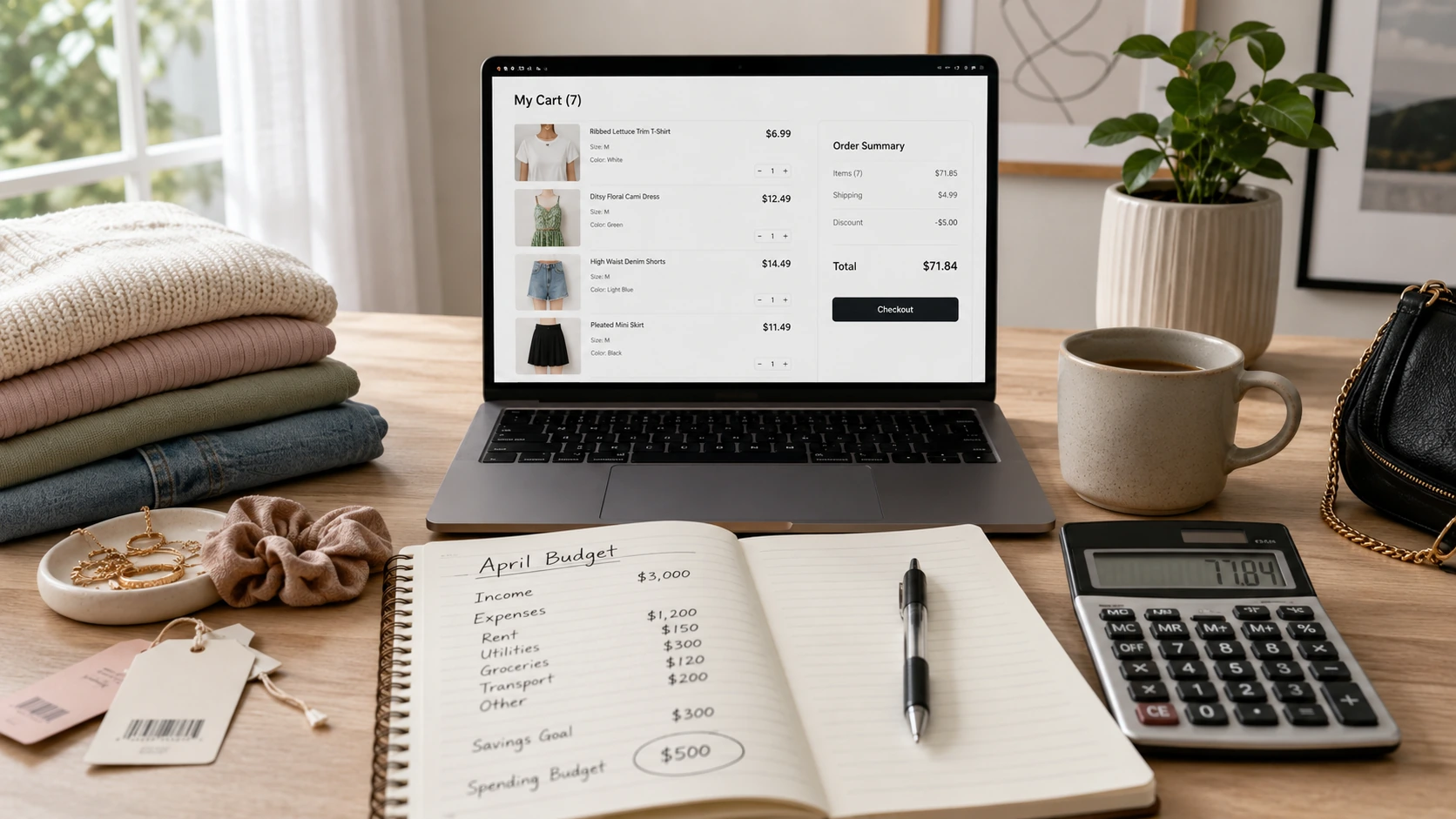
I did not open SHEIN planning to spend much money.
At first, I was just browsing. One top looked cheap. One accessory looked useful. One sale item felt too good to ignore. Then, after a few minutes, I had added enough small things to my cart that the total no longer felt small at all.
That is the SHEIN cart problem.
The issue is not always one expensive purchase. In many cases, the real budget damage comes from many small purchases that feel harmless individually but become expensive when stacked together.
A $5 accessory does not feel serious. A $9 top feels practical. A $3 add-on feels almost invisible. However, once those tiny decisions sit together in one cart, the total tells a different story.
This article is for general information and personal reflection only. It is not personalized financial advice. Everyone’s income, shopping habits, budget, priorities, and financial responsibilities are different. Therefore, use these ideas as a starting point and adjust them based on your own situation.
Table of Contents
What Is the SHEIN Cart Problem?
The SHEIN cart problem happens when many low-priced items feel harmless on their own, but the combined total becomes much larger than expected.
It is not only about SHEIN. This can happen on almost any online shopping platform. However, SHEIN makes the pattern easy to notice because the platform has low individual prices, huge product variety, trend-driven categories, sale sections, discount codes, customer reviews, and constant product discovery.
The problem usually looks like this:
You add one item because it is cheap.
Then you add another because it matches.
After that, you add something small because it is on sale.
Meanwhile, the cart keeps growing.
Before checking out, you finally look at the total and realize you did not make one big spending decision. You made fifteen small ones.
That is the core lesson.
The problem is not always the price of one item. It is the number of small decisions.
Why Small Purchases Feel So Harmless
Small purchases feel harmless because they do not trigger the same hesitation as bigger purchases.
If something costs $80, you might pause. You might compare options. You might ask whether you really need it. However, if something costs $6, the decision feels easier.
At first, every item looks harmless because nothing seems expensive on its own.
That is where online shopping gets tricky.
People often mentally round down cheap items. A $7 item becomes “basically nothing.” A $12 item becomes “not bad.” A $4 accessory becomes “why not?”
However, budgets do not care how small each purchase felt emotionally. The total still adds up.
The Consumer Financial Protection Bureau’s spending tracker helps people sort spending into categories and total those categories so they can better see where money goes 1.
That idea applies directly to online shopping because small purchases are easy to forget when they are spread across one cart, multiple orders, or different payment methods.
In practice, cheap items can feel like savings even when they are extra spending.
That is the strange part.
You may not feel like you are splurging. You may feel like you are being practical.
The Cart Total Tells the Truth
The cart total is honest because it combines every small decision into one number.
While browsing, each item feels separate. One pair of earrings. One basic top. One sale skirt. One phone case. One random item you found while scrolling.
However, checkout does not see separate justifications.
Checkout sees the total.
That total may include:
- Product prices
- Taxes
- Shipping
- Extra items
- Add-ons
- Discount minimums
- Payment method temptation
- Return or exchange concerns
The moment I looked at the total, I realized the cart was basically a receipt for all the tiny justifications I made while browsing.
“It is only a few dollars.”
“This could be useful.”
“I might wear this later.”
“This would help me reach the discount.”
“This is cheap enough.”
Alone, each sentence felt reasonable. Together, they became the problem.
How “Only a Few Dollars More” Becomes the Problem
“Only a few dollars more” sounds harmless until you say it ten times.
That sentence is one of the biggest reasons small purchases add up.
For example, you might add:
- Socks because they are cheap
- Jewelry because it is on sale
- Another top to qualify for free shipping
- A backup size because sizing feels uncertain
- A trend item that may only be worn once
- A small accessory because the cart already feels big anyway
The problem is not that any single item is terrible. The problem is repetition.
If you add one extra $5 item, maybe it does not matter. However, if you add six extra “small” items, the cart changes.
In other words, the phrase “only a few dollars more” becomes expensive when it becomes a habit.
Discounts Can Make Spending Feel Like Saving
Discounts are powerful because they make shopping feel like winning.
A coupon code feels satisfying. A sale label creates urgency. A countdown timer makes the decision feel time-sensitive. Meanwhile, points, rewards, and app-only offers can make a bigger cart feel smarter than it really is.
However, a discount only saves money if you were already planning to buy the item.
If the discount makes you buy something unnecessary, it is still spending.
That was one of the biggest lessons for me. Getting a discount felt good, but the final cart total still mattered. A discounted order can still be over budget.
The FTC advises online shoppers to check the total cost before buying, including shipping, handling, delivery, taxes, and fees 2.
That advice is useful because deals can make the purchase feel smaller while the full checkout cost tells the real story.
Therefore, discounts should reduce a planned purchase, not create a bigger unplanned cart.
Free Shipping Thresholds Can Quietly Increase Your Cart
Free shipping is another classic cart trap.
It feels painful to pay shipping. I get it. Nobody enjoys spending money on delivery instead of products.
However, spending more to avoid shipping does not always save money.
For example, if shipping costs $7 but you add $25 in extra items to avoid it, the cart did not become cheaper. You spent more money. The numbers are illustrative, but the logic is common.
Free shipping thresholds can encourage shoppers to add items they did not originally want.
The emotional logic sounds like this:
“I might as well add something useful.”
But the budget logic says:
“You still spent more.”
That does not mean free shipping is bad. If you already planned to buy enough, great. However, if you are adding random items only to reach the threshold, it is worth pausing.
The Difference Between Cheap and Good Value
Cheap and good value are not the same thing.
Cheap means the price is low upfront.
Good value means the item is actually useful, wearable, and worth owning.
An item is usually better value if:
- You will actually wear it
- It fits well
- It lasts long enough
- It works with your wardrobe
- It solves a real need
- It does not create regret
- Cost per wear makes sense
Cost per wear is simple.
If a $10 item is worn once, it costs $10 per wear. If a $30 item is worn 30 times, it costs $1 per wear. These are simple examples, but they show why the cheapest item is not always the smartest one.
That is why the SHEIN cart problem is not only about price. It is also about usefulness.
A cheap item that sits unused is not a bargain.
It is clutter with a receipt.
The “Future Me Will Wear This” Trap
Online fashion shopping often sells a mood.
A product photo may make an item look like it belongs to a cooler, more organized, more stylish future version of you. Suddenly, you are not just buying a top. You are buying the idea of an outfit, a weekend, a vacation, or a lifestyle.
That is where the “future me will wear this” trap begins.
This can include:
- Buying for an imagined lifestyle
- Buying outfits for events that are not planned
- Buying trend pieces without realistic use
- Buying clothes for a future version of yourself
- Buying because product photos create a mood
Some items look perfect online but do not match daily life.
For example, a dramatic piece may look amazing in photos, but if your real wardrobe is mostly simple basics, it may sit untouched. A trend item may feel exciting during checkout, but if you cannot imagine wearing it next week, it may not be worth buying.
That said, fashion should still be fun.
The point is not to avoid every playful purchase. The point is to know whether you are buying for your real life or for a fantasy version of your schedule.
Why SHEIN Carts Grow So Fast Compared to Normal Shopping
SHEIN carts can grow quickly because the shopping environment makes browsing feel endless.
There is product variety, search, filters, recommendations, customer photos, wishlists, sale sections, similar items, and trend categories. As a result, shoppers can move from one item to another without a strong stopping point.
In a physical store, you can feel the items in your hands. You can see the pile growing. You may even feel a little embarrassed carrying too much.
Online, the cart is cleaner.
There is no pile. There is no weight. There is just a number in the corner.
Because of that, it is easier to keep adding without fully feeling the purchase.
This is why an online shopping budget matters. Consumer.gov explains that a budget helps people see how much money they make and how they spend it each month 3.
That kind of visibility is especially useful when shopping happens digitally and small purchases are easy to ignore.
Reviews Help, But They Can Also Encourage Overbuying
Reviews can be genuinely helpful.
Customer photos can help you judge fit, color, length, and quality. Size reviews can reduce uncertainty. Negative reviews can warn you about problems that product photos do not show.
However, reviews can also encourage overbuying.
If many people say an item is cute, worth it, or better than expected, it becomes easier to justify adding it. Social proof can make a product feel safer. Meanwhile, customer photos may make the item feel more real and more tempting.
The trick is to use reviews carefully.
Use reviews to avoid bad purchases, not to justify unnecessary ones.
For example, before keeping an item in the cart, read negative reviews first. Check whether people mention sizing issues, fabric problems, transparency, fit, comfort, or return difficulty. If the reviews make the item feel risky, do not let a low price talk you into ignoring that risk.
The Hidden Cost of Returns
Returns are part of online shopping, but they are not always effortless.
Even when a return is possible, it can still cost time and energy.
The hidden cost of returns may include:
- Time
- Packaging
- Printing or saving labels
- Return shipping
- Refund waiting time
- Store credit instead of refund
- Items that are not worth returning
- Different rules for sale items
- The mental effort of dealing with it later
The FTC recommends checking a seller’s refund policies before buying, including who pays return shipping, how many days you have to return an item, and whether restocking fees apply 2.
That advice matters because a cheap item that is annoying to return can become clutter instead of savings.
Before checking out, I started asking myself:
“If this does not work, will I actually return it?”
If the honest answer was no, the item had to work much harder to justify staying in the cart.
The Budget Problem Is Usually Visibility
The SHEIN cart problem is really a visibility problem.
When you pay digitally, the spending does not always feel as real as cash leaving your hand. Cart totals can feel distant until checkout. Small transactions disappear into bank statements. Meanwhile, buy now, pay later options can make the order feel smaller in the moment because the full cost is split over time.
The FTC explains that many stores and online shops offer buy now, pay later as an installment credit or “pay over time” plan 4.
Buy now, pay later is not automatically bad. However, it can make the full cart feel less immediate if you are not tracking the entire amount.
That is why the total matters more than the payment size.
Whether the order is paid now or later, the budget still needs to absorb it.
How I Started Reviewing My Cart Differently
Eventually, I started treating the cart like a draft, not a decision.
That changed everything.
Here is the cart review method that helped me:
- Leave the cart for 24 hours.
- Remove anything I forgot adding.
- Ask where each item will be worn.
- Check whether it matches clothes I already own.
- Calculate simple cost per wear.
- Check reviews and sizing.
- Check return policy.
- Remove items added only for free shipping or discount thresholds.
- Compare the final cart total to the monthly shopping budget.
The waiting period helped most.
Excitement fades. Urgency cools down. A sale item that felt irresistible at midnight may feel unnecessary the next afternoon.
In practice, waiting gave logic enough time to catch up with excitement.
The 24-Hour Cart Rule
The 24-hour cart rule is simple.
Before buying, wait at least one day.
During that time, ask:
- Do I still want this?
- Do I remember why I added it?
- Would I buy it without the discount?
- Does it fit my current wardrobe?
- Will I wear it several times?
- Is this replacing something or adding clutter?
- Can my budget handle this order?
If the item only feels exciting during a countdown, it may not be worth buying.
This rule does not mean you can never shop spontaneously. However, it creates a pause. And sometimes, a pause is all you need to avoid regret spending.
The “Three Outfit” Test
The three outfit test is one of my favorite ways to check whether clothing is worth buying.
Before buying an item, imagine three outfits using clothes you already own.
If the item only works with imaginary future purchases, it may create more spending.
For example:
- A top that needs new pants
- Shoes that need a specific dress
- Accessories that only match one event outfit
- A trend piece that does not fit your everyday style
A cheap item becomes less cheap if it requires more purchases to become usable.
On the other hand, if the item works with clothes you already wear, it has a better chance of being good value.
The “Would I Buy This In Person?” Question
Another helpful question is:
Would I buy this if I saw it in a physical store?
This question is surprisingly powerful.
In a store, you would carry the item. You would feel the fabric. You would compare it with other items. You would stand in line. You would see the total at checkout.
Online, adding to cart is almost too easy.
This question helps reduce:
- Random add-ons
- Trend-driven items
- Low-quality guesses
- Duplicate pieces
- Items added only because of price
Many cart items lose power when imagined in a real checkout line.
If I would not carry it to a physical cashier, I probably do not need to order it online.
How to Set a SHEIN Shopping Budget
A SHEIN shopping budget does not need to be complicated.
The goal is to create boundaries before browsing, not after the cart is already full.
Here is a simple approach:
- Decide a monthly clothing or shopping budget.
- Separate needs from wants.
- Set a cart limit before browsing.
- Track all fashion purchases, not only SHEIN.
- Include accessories, shipping, taxes, and returns.
- Avoid borrowing from essential categories.
- Use cash-like limits if digital spending feels too easy.
- Review the cart total before applying discounts.
That last point matters.
Discounts can make the final total feel better, but they should not be used to excuse a bigger cart.
If the cart is over budget before the discount, ask whether the discount is helping or simply making overspending feel more acceptable.
How to Avoid Buying Duplicates
SHEIN carts can reveal shopping patterns.
Sometimes the cart does not show what you need. It shows what you keep buying again and again.
For example:
- Another black top
- Another pair of similar jeans
- Another basic dress
- Another bag in a slightly different shade
- Another trend piece that repeats something already owned
This happened to me more than once.
The cart revealed not only what I wanted, but what I kept repeating.
Before checking out, check your closet.
If you already own a similar item, ask:
Is this replacing it?
Is this better than what I have?
Will I wear both?
Am I buying this because I need it or because it feels familiar?
Sometimes the best purchase is the one you do not make because you already have a version of it.
How to Shop SHEIN More Intentionally
The goal is not to stop shopping forever.
The goal is to shop with awareness.
Here are practical ways to shop more intentionally:
- Start with a list.
- Set a budget before browsing.
- Avoid shopping while bored or stressed.
- Check measurements.
- Read negative reviews.
- Look at customer photos.
- Avoid buying only because of discounts.
- Use the 24-hour cart rule.
- Check return policies.
- Think in cost per wear.
- Choose versatile pieces.
- Remove items that require more purchases.
- Keep a monthly shopping log.
A monthly shopping log is especially useful because it shows the real total across all platforms, not just one order.
That matters because a SHEIN order may feel small, but if it is combined with other fashion purchases, beauty items, accessories, and random online shopping, the monthly total may be higher than expected.
What I Removed From My Cart First
When I started reviewing my cart seriously, I removed the easiest items first.
That included:
- Items added only to reach free shipping
- Items similar to clothes I already owned
- Trend pieces with no realistic outfit plan
- Items with uncertain sizing
- Accessories added only because they were cheap
- Pieces with weak or concerning reviews
- Items that felt exciting for five minutes but not useful later
Surprisingly, removing items did not feel like losing.
It felt like getting control back.
The cart became smaller, but the order became better.
That is an important difference.
What I Kept in My Cart
The items I kept had to meet better standards.
They needed to:
- Match my current wardrobe
- Fit a real need
- Have useful review evidence
- Work in multiple outfits
- Fit the budget
- Have a realistic use
- Feel worth buying without urgency
The best cart is not always the cheapest cart.
It is the cart with the least regret.
A smaller cart with useful items is better than a large cart full of things that only looked good during a sale.
Common SHEIN Cart Mistakes
The SHEIN cart problem usually comes from small mistakes repeated too often.
1. Adding Items Because They Are Cheap
Cheap is not the same as needed.
2. Shopping Without a Budget
Without a limit, the cart can keep growing without resistance.
3. Ignoring the Cart Total Until Checkout
The total should be checked early and often.
4. Buying to Reach Free Shipping
Spending more to avoid shipping can still mean spending more overall.
5. Trusting Product Photos Without Checking Reviews
Product photos help, but customer reviews often reveal fit and quality concerns.
6. Ignoring Measurements
Sizing uncertainty can lead to returns, regret, or backup-size purchases.
7. Buying Duplicates
Another version of something you already own may not add much value.
8. Buying for an Imaginary Lifestyle
If it does not fit your real life, it may not get worn.
9. Ignoring Return Policies
Return rules matter, especially for sale items or low-cost items.
10. Treating Discounts Like Savings
A discount is not savings if it made you buy something unnecessary.
11. Using Buy Now, Pay Later Without Tracking the Full Cost
Smaller payments can make the order feel lighter than it is.
12. Keeping Items Only Because Returning Them Feels Annoying
If you know you will not return something, be more careful before buying it.
A Simple 7-Day SHEIN Cart Reset
If your cart feels out of control, try a 7-day reset.
Day 1: Do Not Buy
Just review your current cart.
Day 2: Remove Duplicate Items
Delete anything too similar to something you already own.
Day 3: Use the Three Outfit Test
Remove anything you cannot style with three outfits from your current wardrobe.
Day 4: Check Reviews and Sizing
Look at customer photos, negative reviews, measurements, and fit comments.
Day 5: Compare the Total to Your Budget
Check whether the cart fits your monthly shopping budget.
Day 6: Check Return and Refund Policies
Make sure you understand the return process before buying.
Day 7: Decide Calmly
Buy only what still makes sense, or close the cart entirely.
The goal is not to ruin the fun.
The goal is to slow the purchase down enough for logic to catch up with excitement.
What the SHEIN Cart Problem Taught Me About Money
The SHEIN cart problem taught me that small purchases count.
Cheap does not always mean valuable. Discounts can still lead to overspending. Free shipping thresholds can increase the cart. Reviews help, but they should not justify unnecessary purchases.
Most importantly, the cart total is more honest than the item price.
A single item may feel harmless. However, the cart remembers every decision.
That was the personal finance lesson.
The cart became a mirror for my spending habits. It showed me when I was bored. It showed me when I was chasing discounts. It showed me when I was buying for an imaginary lifestyle. It also showed me when I was making genuinely useful purchases.
Because of that, I stopped asking only, “Is this cheap?”
Instead, I started asking, “Is this worth owning?”
That question changed the way I shopped.
FAQ About the SHEIN Cart Problem
What is the SHEIN cart problem?
The SHEIN cart problem happens when many cheap-looking items feel harmless individually but create a much larger cart total together.
Why do small SHEIN purchases add up so fast?
They add up because low prices reduce hesitation, and shoppers may repeat the “only a few dollars more” decision many times.
Is SHEIN actually budget-friendly?
SHEIN can be budget-friendly if you buy intentionally and stay within your shopping budget. However, low prices can also encourage overbuying if you do not track the total.
How do I stop overspending on SHEIN?
Set a shopping budget before browsing, use the 24-hour cart rule, remove duplicate items, check reviews, and compare the final total to your budget.
Should I wait before checking out?
Yes, waiting can help reduce impulse shopping. A 24-hour pause often makes it easier to see which items still feel useful after the excitement fades.
How can I tell if a cheap item is worth buying?
Ask whether you will wear it, whether it matches your wardrobe, whether it has good review evidence, and whether the cost per wear makes sense.
What is cost per wear?
Cost per wear means dividing the item’s price by how many times you expect to wear it. A cheap item worn once may be worse value than a more expensive item worn often.
Do discounts really save money?
Discounts save money only when they reduce the price of something you already planned to buy. If a discount makes you buy more, it may increase spending.
Should I buy more just to get free shipping?
Not always. If you add unnecessary items to avoid shipping, you may spend more overall than the shipping fee itself.
How do I avoid impulse buying online?
Use a waiting period, shop with a list, avoid browsing while bored or stressed, check your cart total often, and review your monthly shopping budget.
Why do I regret cheap online purchases?
Cheap purchases often create regret when they do not fit well, do not match your wardrobe, are forgotten quickly, or were bought only because of price.
How should I budget for online shopping?
Create a monthly shopping budget that includes clothes, accessories, shipping, taxes, returns, and purchases from all online stores, not just one platform.
Final Takeaways
The SHEIN cart problem is caused by many small decisions.
Cheap items can still create expensive totals.
Discounts can encourage bigger carts.
Free shipping thresholds can increase spending.
Cost per wear matters more than item price.
Reviews help, but they should not justify unnecessary purchases.
Waiting before checkout helps reduce impulse buying.
A shopping budget creates boundaries.
The goal is not guilt. The goal is awareness.
The SHEIN cart problem taught me that overspending does not always feel dramatic while it is happening. Sometimes it feels like one cheap top, one small accessory, one sale item, and one final “it is only a few dollars more.”
However, the cart total remembers every decision.
And eventually, so does the budget.